How The Short Store Scaled from ₹3.8L to ₹30L/Month in 6 Months — And Hit ₹1 Lakh in a Single Day
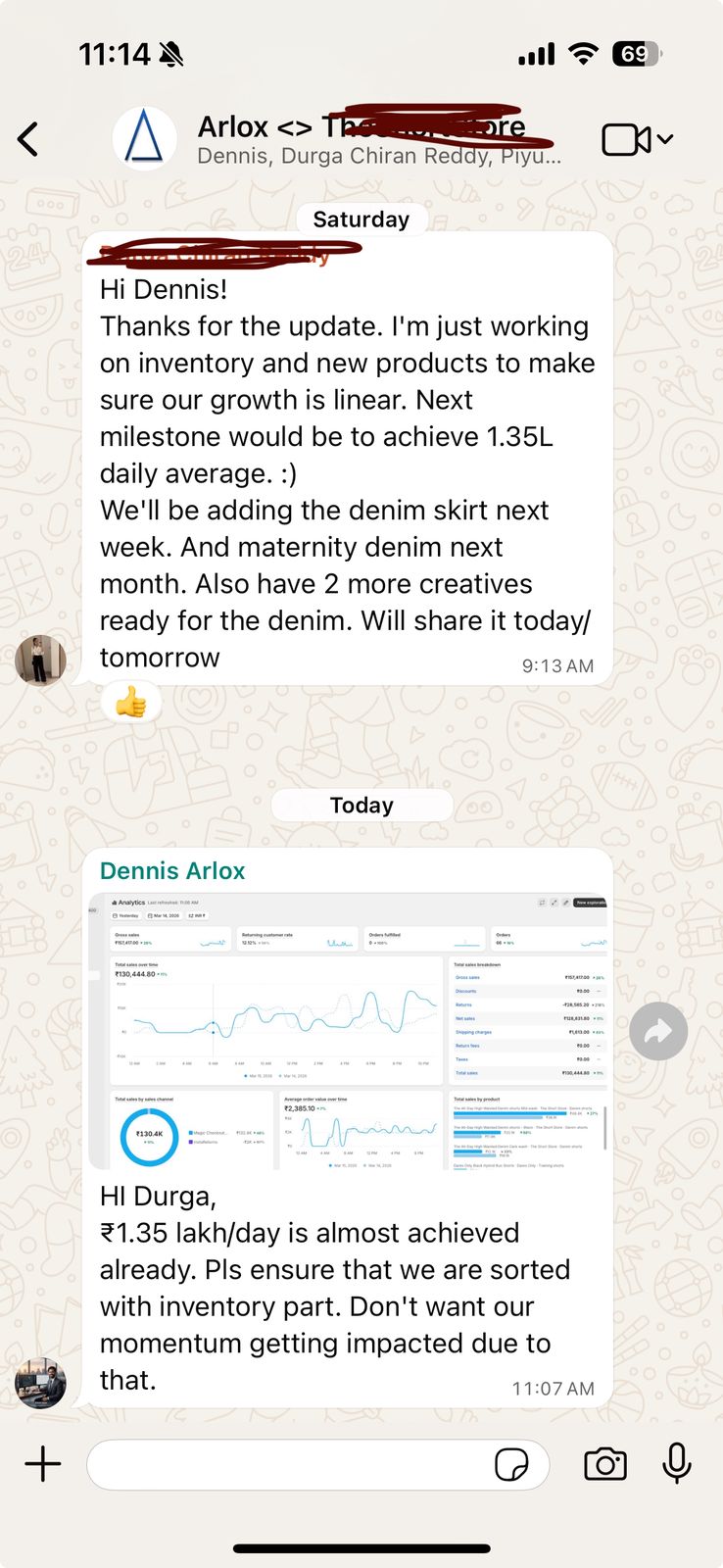
₹1,00,000 in sales. In a single day. For a brand that was doing ₹3.8 lakh per month seven months earlier. The founder of The Short Store stared at the Shopify dashboard and typed into the WhatsApp group: "I noticed that we touched 1 lakh in sales yesterday for the first time ever. Big Hi5 to that." No exclamation marks. Just quiet disbelief. The kind of message you send when something you'd been chasing for years suddenly becomes real.
BRAND SNAPSHOT
Industry: Fashion & Apparel (D2C)
Category: Women's & Men's Shorts — Denim, Running, Skorts, French Terry, Activewear
Geography: India (Chennai-based, selling pan-India)
Stage: ₹3.8L/month → ₹30L/month in 6 months
Services: Meta Ads (Scientific Media Buying), Creative Strategy, Landing Page Optimization, Abandoned Cart Recovery, Inventory & Pricing Strategy, CRO, Catalogue Ads
THE PROBLEM
The Short Store had a genuinely great product — high-quality shorts across multiple categories for men and women — but was stuck at ₹3.8 lakh per month. The founder described feeling "overwhelmed" by managing production, content, social media, and performance marketing alone. Previous marketing efforts yielded a 2.5x ROAS that wasn't translating into real profitability. Agencies in the past had set up wrong landing pages, used generic language, and monitored ad accounts only once or twice a week. The brand was bleeding time and money while sitting on untapped potential.
WHY IT WAS HAPPENING
Three core problems were compounding:
No creative system. Ads used the same fatigued creatives for months. There was no testing framework — no structured hooks, no category-specific messaging, no UGC pipeline. The founder was trying to shoot, edit, and supply creatives herself while running the entire business.
Wrong funnel architecture. Landing pages didn't match ad intent. There were no proper TOF (top-of-funnel) campaigns separated from conversion campaigns. The catalogue wasn't optimized — when the Arlox team set it up properly, it immediately started delivering 4x+ ROAS.
Operational blind spots. Size chart changes tanked conversion rate overnight. Pricing adjustments were made without measuring downstream impact. The abandoned cart recovery messaging was weak — no product images, no urgency, no personalization. COD charges at ₹100 were creating a 30% drop in add-to-cart-to-purchase rate.
THE SOLUTION
The Arlox team moved fast. Ads went live within 10 days of onboarding.
Mythos (Creative Advantage): The team implemented a rigorous creative velocity system. Instead of letting one creative run until exhaustion, they tested multiple hooks per product — pain-point-driven ("denim shorts that don't ride up when you sit"), feature-driven (zipper pockets, flatlock seams), and format variations (static carousels, UGC reels, VO + captions). When a founder-shot denim shorts reel started delivering 3.47x ROAS, they created variations with different hooks to extend its lifespan. They identified plus-size as a massive untapped segment — one plus-size creative hit 11x ROAS in a single day and became the account's top performer.
Sentinel (Scientific Media Buying): Daily performance monitoring replaced weekly check-ins. The team restructured the campaign architecture: proper TOF awareness campaigns separated from conversion campaigns, catalogue ads optimized to 4x+ ROAS, and CAC control rules applied to new campaigns after initial learning periods. When the Meta ad account hit its credit limit, the Arlox team personally contacted Meta to increase the credit line from the default to ₹13 lakh. Budget was aggressively reallocated — cutting spend by 30% on underperforming creatives while scaling winners. Daily video performance updates kept the founder informed without requiring calls.
Vault (Brand Value Engine): The team diagnosed and fixed critical funnel leaks. COD charges were reduced from ₹100 to ₹49, recovering the 30% checkout drop. They pushed the brand to integrate customer reviews (Judge.me) as trust signals — Meta rewards landing pages with review quality through better ad placements. Abandoned cart messaging was overhauled with product images and urgency triggers. When inventory of the best-selling denim sold out in plus sizes, they set up a pre-order system to maintain revenue momentum. Strategic offers like festive-season bundles and Black Friday campaigns were designed to move slow inventory without resorting to discount mania.
THE RESULTS
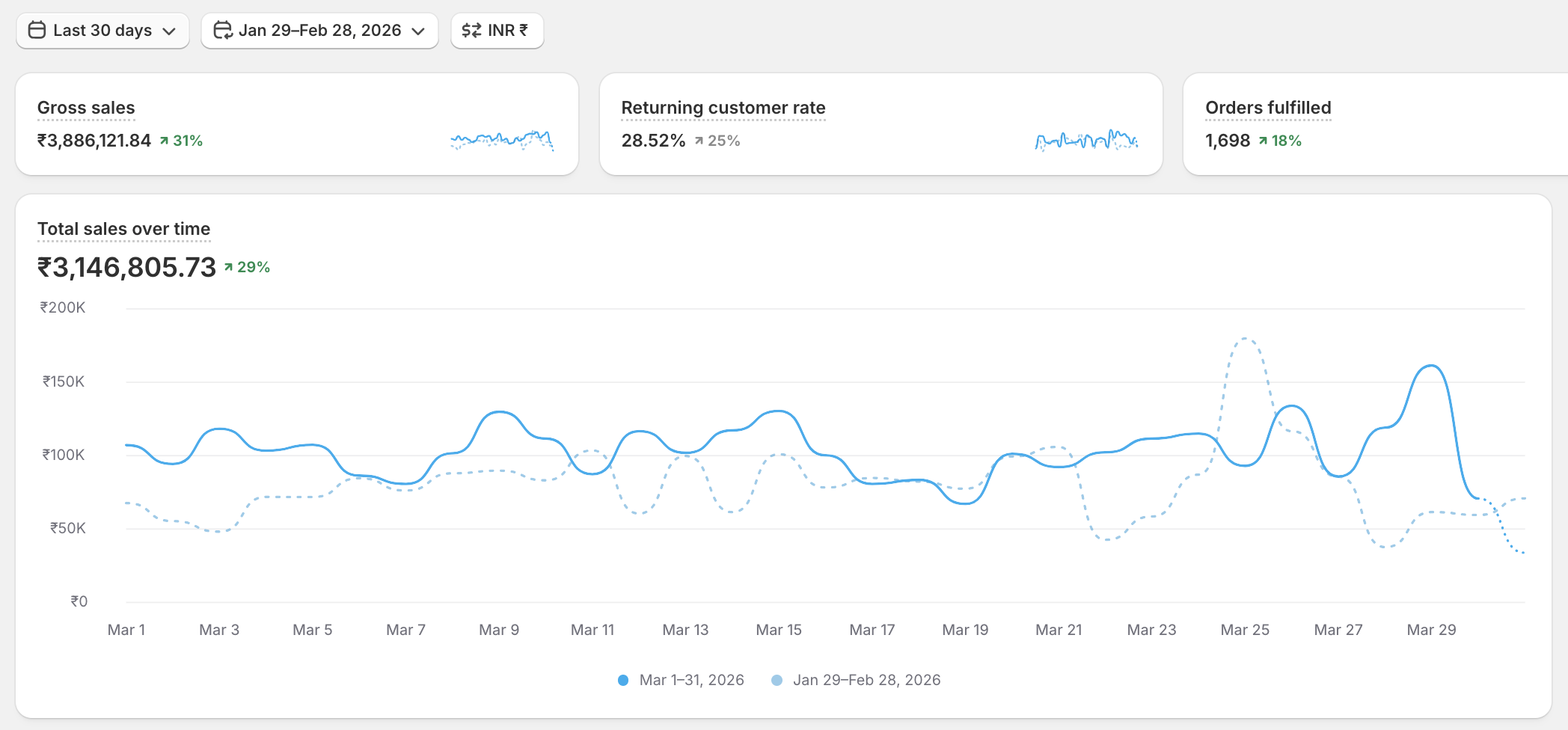
₹3.8L → ₹30L/month in 6 months — an ~8x revenue increase
₹1 lakh in a single day — first-ever six-figure daily revenue
₹23L net sales in a single month (February 2026)
3.3x overall ROAS — consistently profitable at scale
Plus-size denim became the #1 revenue driver after being identified as an untapped segment, hitting 11x ROAS on top-performing creatives
Production scaled from 500 pcs/order to 4,500 pcs/order in denim alone to keep pace with demand
Meta ad account credit line increased from default to ₹13 lakh to support scaling
The founder messaged: "What felt like a distant goal last year actually happened in a single day and that feels surreal. Finally seeing results after years of effort."
LESSONS FOR SIMILAR BRANDS
Don't sleep on plus sizes. The Short Store's biggest revenue unlock came from serving plus-size customers in denim — a market segment most Indian D2C brands ignore. As the Arlox team noted: "Whoever took our advice on plus size seriously scaled to almost ₹1Cr/month."
Your inventory is your growth bottleneck, not your ads. The biggest constraint wasn't ROAS or creative — it was 45-day production lead times. Plan inventory 2-3 months ahead of your scaling targets.
Small funnel changes compound. Reducing COD charges by ₹51 and adding product reviews recovered a 30% conversion drop. Every checkout friction point you fix is found money.
CHALLENGES WE FACED
Stock-outs at the worst time. The best-selling plus-size denim repeatedly sold out as ads scaled faster than production could keep up. Pre-orders bridged the gap, but momentum was lost each time. The brand had to partner with a second manufacturing unit and scale from 500 to 4,500 pcs per batch.
Content creator disputes. A UGC creator whose plus-size denim ad was delivering 4x+ ROAS demanded ongoing compensation and posting negative comments on ads. The team navigated the situation legally and transitioned to new creators with clear usage agreements upfront.
Payment gateway outages. A Razorpay webhook failure killed checkout for nearly a full day, costing an estimated ₹1 lakh in lost revenue. The team paused ads instantly and resumed within hours of the fix — then launched aggressive new campaigns that hit ₹2L in a single day to recover the loss.

Durga Chiranjeevi
Founder
Before
3.8L MRR
After
30L MRR