How Baasta Went From ₹17L to ₹30L/Month in 3 Months by Finally Getting an Agency That Owned the Numbers
The previous agency always had a reason. Meta was down. UPI was glitching. The algorithm had changed. There was a new update. The explanations arrived on schedule — and so did another flat month. Then they paused all ads on the best-selling product. Cited low ROAS. Offered nothing in its place. Baasta came to Arlox at ₹17L/month, skeptical of the entire category. Three months later: ₹30L/month, ₹1 lakh days running consistently, and a 72-hour sale that crossed ₹3L by noon on Day 1.
BRAND SNAPSHOT
Industry: Women's fashion D2C (India)
Category: Premium ethnic and contemporary sets, dresses, co-ords — Shopify-based
Geography: India (pan-India)
Stage: ₹17L/month → ₹30L/month in 3 months
Services: Meta Ads, Creative Strategy, Razorpay Magic Checkout Integration, Conversions API, WhatsApp Retargeting, Breakeven ROAS Analysis, Sale Architecture
THE PROBLEM
When Baasta joined Arlox in May 2025, the brand was doing ₹17L/month — a number that had stayed flat for too long. The founder had the product, the aesthetic, the ambition. What she didn't have was a marketing partner who would own the results.
The clearest summary came in the first WhatsApp message after onboarding: "We always got 'meta is down,' 'UPI is down,' 'algo is changed,' 'there's a new update.' Sometimes it's understandable but we got this almost all the time." A previous agency's entire mode of operation had been to explain away underperformance rather than fix it. And the most visible outcome of that culture was a strategic decision that defied logic: the previous agency had paused all advertising on the Sheila Set — Baasta's best-selling product — due to low ROAS. No replacement creative. No alternative. The revenue driver had simply been stopped.
The brand arrived frustrated, primed for disappointment, and watching its cash flow stay flat while ad budgets kept going out.
WHY IT WAS HAPPENING
The stagnation wasn't random. It had infrastructure underneath it.
Accountability vacuum. Without daily transparent reporting, the founder had no tool to distinguish a real platform issue from a campaign management failure. Each individual excuse was plausible. Together, they were a system that made poor performance invisible. The absence of accountability wasn't an attitude problem — it was structural. When no one owns the numbers, no one fixes them.
Technical gaps compounding over time. The Meta pixel was running without Conversions API integration, meaning the attribution data the algorithm was optimizing on was incomplete. Every rupee was being spent to reach audiences identified through imperfect signals. The checkout infrastructure had similar gaps: with 62.5% of all orders coming in as COD, and 107 out of 125 RTOs in the early campaign period tracing back to COD orders, the brand was generating gross revenue that was being quietly eroded by returns. These weren't visible in a surface-level ROAS number — but they were destroying net margins.
Budget setup not built for performance marketing scale. The brand was paying Meta ad bills through a standard credit card, and card limits were triggering campaign pauses at critical hours. Revenue was being lost not because of audience or creative problems — but because the billing infrastructure couldn't keep the ads running continuously.
The product had genuine demand. The brand had organic traction and returning customers. The gap was in the infrastructure, the data, and the accountability layer sitting between the product and the revenue that should have been flowing.
THE SOLUTION
Mythos — Creative Advantage:
The creative strategy was anchored in one discipline: identify the products the market had already signaled it wanted, then build creative infrastructure around those products — not around the ones the brand assumed would work.
The Sheila Set — the product the previous agency had stopped advertising — was relaunched as the primary creative focus. New angles, new formats, testing against fresh audience sets. Within the first campaign period, it emerged as the clear top performer. The Savera Set, June Dress, and Rosemary Dress were added as the supporting stack once their metrics crossed the threshold.
Format testing revealed a clear winner: short-form video under 15 seconds with fast cuts and Bollywood audio performed consistently above other formats for this audience. UGC-style content, creator collaborations, and BTS reels were layered into the awareness campaigns to build familiarity with cold audiences. A Flexi ad running multiple creative variations under a single ad set reached 6x ROAS by June — the result of letting the algorithm select winners across a well-curated pool rather than backing one creative at a time.
Sentinel — Scientific Media Buying:
Before a rupee of budget was changed, a custom breakeven ROAS model was built from Baasta's actual cost structure: COGS, RTO rate, fulfillment costs, and fixed overhead. The analysis established that at ₹25L gross revenue, the maximum viable ad spend was ₹8.7L/month, with a breakeven gross ROAS of 2.9x. Every budget decision from that point was anchored to this model rather than intuition or target-chasing.
Campaign structure followed a disciplined funnel: top-of-funnel campaigns pushed reach to cold audiences, middle-of-funnel moved warm prospects toward intent, and Closer campaigns with CAC controls converted high-intent buyers efficiently. Winners graduated between stages based on performance data, not gut feeling.
Audience frequency was managed actively — exclusions kept frequency under 2.0 to prevent the account from burning reach on the same audience. Attribution settings were shifted from 7-day click to 1-day click when data showed buyer behavior was faster, improving the quality of Meta's optimization signals. Budget pacing was reviewed daily; no campaign went unchecked.
By July, the account was hitting ₹1L+/day in revenue at a ₹30K/day ad spend — a sustainable ROAS approaching 3.5x — and the budget had not been touched in days because the structure was stable enough to leave running.
Vault — Brand Value Engine:
The infrastructure overhaul ran in parallel with the campaign work. Razorpay Magic Checkout was set up and integrated with Meta's Conversions API for accurate event tracking. Top-selling products were linked directly to product-specific landing pages to reduce the click-to-purchase distance. The COD problem was tackled in layers: Magic Checkout reduced COD rates for high-intent buyers by simplifying prepaid checkout, partial COD was implemented for high-RTO pincodes, and a ₹49 COD fee was tested as a friction layer to separate committed buyers from casual ones. WhatsApp automation via Interakt was activated for abandoned cart recovery — browse abandonment and cart abandonment messages sent to warm audiences who hadn't completed purchase.
The brand's Meta billing was restructured to a credit line to eliminate the payment-triggered ad pauses that had been costing revenue daily.
The 72-hour sale in late July was the culmination of this infrastructure — the first time the brand had run a structured promotional event with a proper execution framework: hype-building ad campaigns launched 2 days prior to build awareness, countdown timers on the website, urgency-based Instagram stories, sale creatives going live at midnight, partial COD to manage RTOs during the discount period, and a disciplined ₹2.25L ad budget allocated across 5 days. Day 1 of the sale crossed ₹1L before 9:00 AM and hit ₹3L by noon. Days 2 and 3 closed at 3.9x and 4.6x ROAS respectively.
THE RESULTS
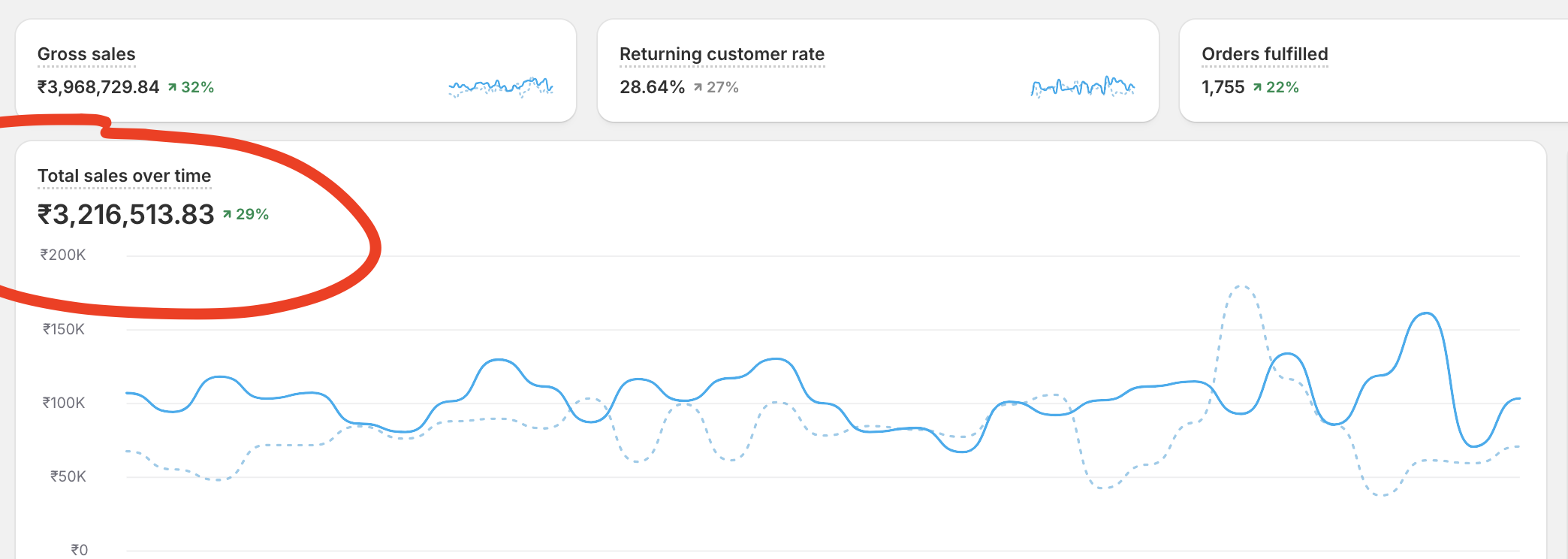
₹17L → ₹30L/month in 3 months — brand's confirmed monthly revenue trajectory (pre-Arlox baseline to Month 3)
₹1L+/day revenue consistently achieved from Meta Ads by Month 3 on a ₹30K/day budget
6x ROAS on Flexi ad creative — Sheila Set reaching its potential after being paused by the previous agency
3.9x ROAS on routine campaign days at ₹23K–₹30K ad spend
72-hour sale: ₹1L crossed before 9:00 AM on Day 1; ₹3L revenue by noon at ₹1.07L spent; Day 3 closed at 4.6x ROAS
COD risk contained: 107/125 early RTOs traced to COD orders — addressed through Magic Checkout integration, partial COD implementation, and COD fee strategy, reducing net revenue leakage going forward
LESSONS FOR SIMILAR BRANDS
Accountability is a performance variable, not a cultural bonus. If your agency's response to every underperforming month is an external explanation, that is the problem — not the algorithm, not the platform. When a partner owns the numbers daily and explains exactly what changed and why, performance becomes fixable. When they don't, every bad result is a force of nature.
Stopping ads on a bestseller is almost never the right call. Low ROAS on a winning SKU is a creative or audience problem. The fix is to change the creative or the targeting — not to pause the product with demonstrated market demand. If your agency's solution to a struggling campaign is to stop the ads on your best-selling product with no replacement plan, that is the signal to change partners.
COD is a cash flow problem masquerading as a payment option. At 62.5% COD orders and a 85%+ RTO rate on those COD orders, the brand was shipping products it would never get paid for. Building the infrastructure to shift even 10–15% of COD orders to prepaid — through better checkout design, partial COD, and intelligent COD restrictions — compounds directly into net revenue without touching ad spend at all.
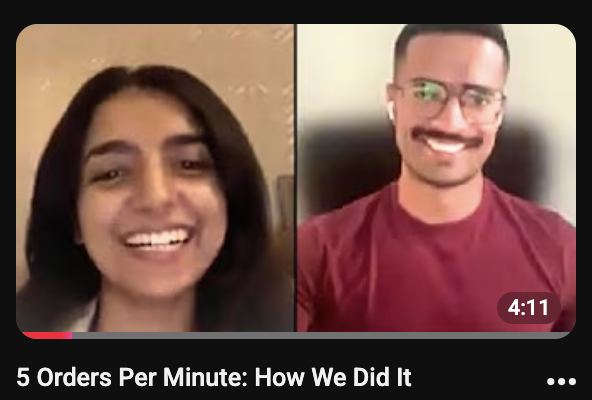

Shruti Vishnoi
Founder
Before
17L MRR
After
30L MRR